
If you cannot prove your resilience, you are a liability that will be off-boarded.
The UK Cyber Resilience Bill 2026 is no longer a distant legislative proposal; it is an active market force. As the NCSC’s latest Annual Review reveals a 50% surge in nationally significant incidents, the government has responded with the most aggressive cyber legislation in a decade.
For the UK’s 5.5 million SMEs, the bill introduces a "hidden" compliance cliff. Even if your business isn't a "Critical Supplier" by name, your customers likely are. Under the new Bill, large-scale buyers and "Operators of Essential Services" (OES) are now legally mandated to audit their supply chains.
If you cannot prove your resilience, you are a liability that will be off-boarded.
The "Supply Chain Blind Spot" by the Numbers
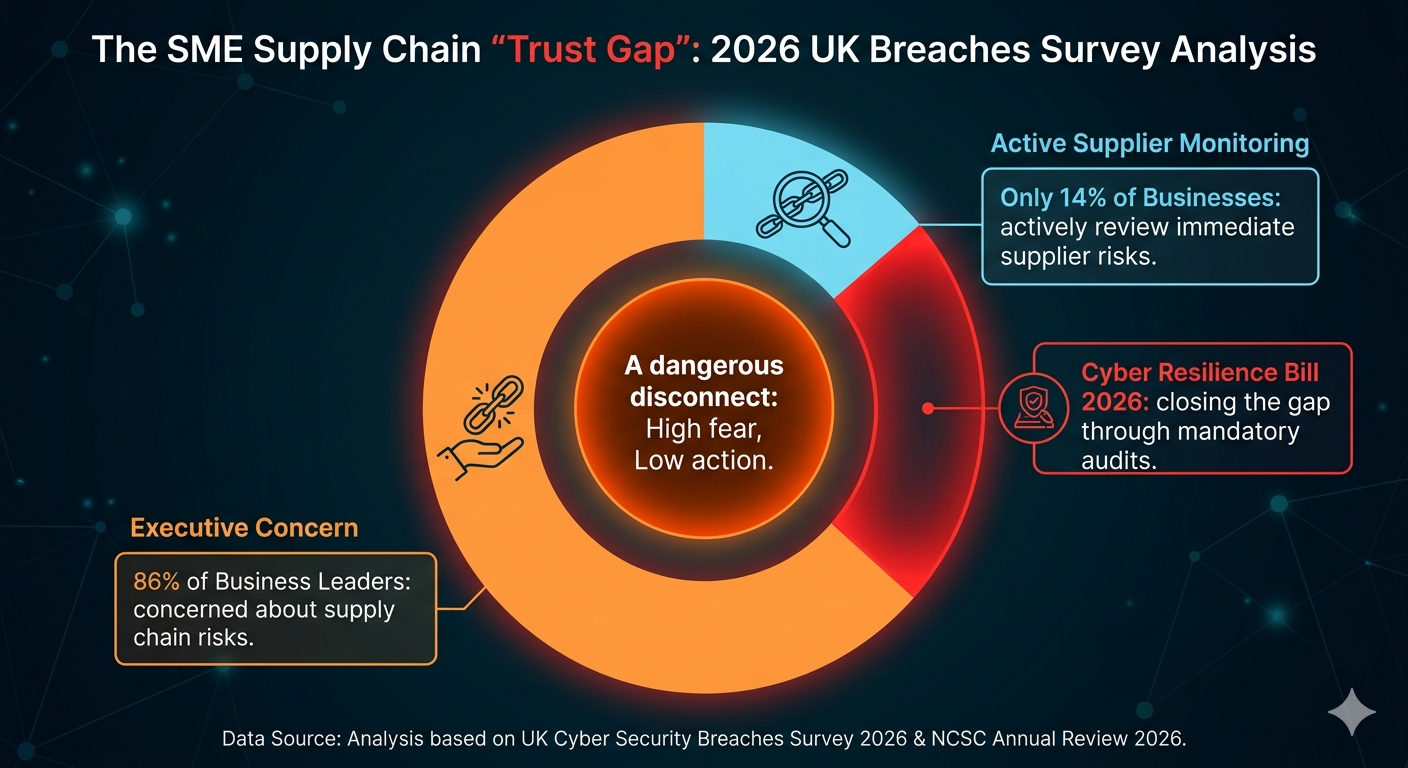
The 2026 Cyber Security Breaches Survey highlights a dangerous disconnect. While 86% of business leaders express deep concern over supply chain risks, only 14% of businesses actually review the cyber security risks posed by their immediate suppliers.
The NCSC warns that attackers are exploiting this gap, using the "soft underbelly" of SME vendors to pivot into high-value targets.
UK Compliance Readiness Checklist for SMEs (2026)
Use this checklist to assess your standing against the Cyber Resilience Bill 2026 and the NCSC Cyber Assessment Framework (CAF).
Focus Area | Requirement | CyberSentrx Alignment |
1. Mandatory Reporting | Can you notify the NCSC of a significant incident within 24 hours? | Real-Time Alerting: We detect exposures before they become reportable incidents. |
2. Supply Chain Audit | Do you have a "live" map of your external attack surface to show your enterprise clients? | Continuous EASM: Automated reports you can hand to your customers as "Proof of Resilience." |
3. Identity Hygiene | Is MFA mandatory across all cloud services (now a Cyber Essentials 2026 requirement)? | Identity Threat Detection: We find leaked credentials on the dark web before they bypass your MFA. |
4. Shadow IT Discovery | Can you account for every "Shadow AI" or API tool connected to your web platform? | Autonomous Discovery: We find the APIs and "Ghost Servers" your team forgot existed. |
5. Vulnerability Triage | Are you patching Critical flaws within the 1.6-day "Deadzone"? | Agentic Prioritization: Our AI triages your bugs so you fix what matters, not just what's high-scored. |
Visualizing the 2026 Risk Landscape
To understand why the Cyber Resilience Bill was passed, we must look at the two defining trends of the last 12 months: the shift in attack volume and the total failure of the traditional "perimeter."
Chart 1: The Escalation of Nationally Significant Incidents
This chart shows the explosive growth in high-impact incidents handled by the NCSC, justifying the move toward mandatory reporting and heavy fines (£17m or 4% of turnover).
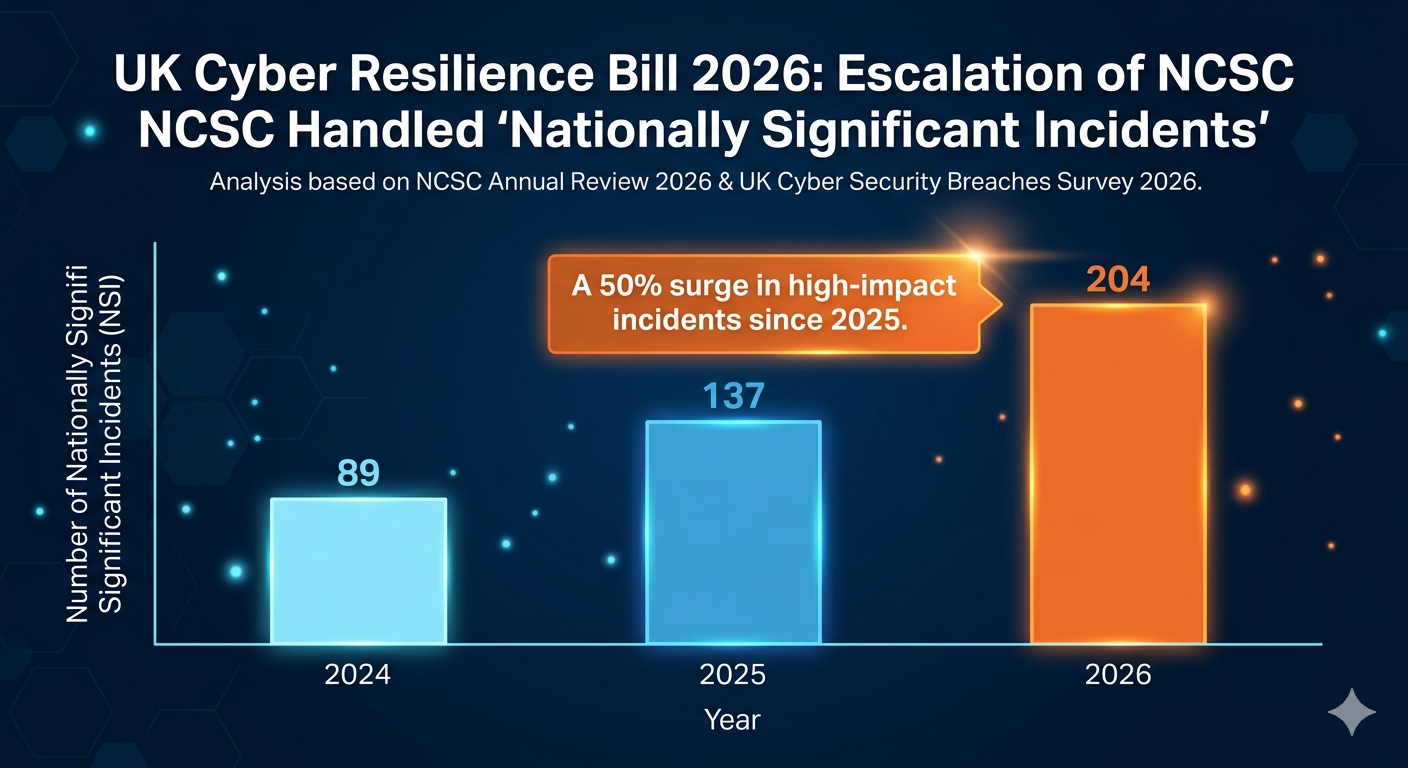
Chart 2: The SME Supply Chain "Trust Gap"
This visualization highlights the disconnect between concern and action. While almost every board is worried about the supply chain, a fraction of them are actually monitoring it—a gap that the 2026 Bill is designed to close.
The CyberSentrx Advantage: Compliance as a Service
Compliance in 2026 shouldn't be a paperwork nightmare. CyberSentrx was built to turn the requirements of the Cyber Resilience Bill into an automated background process.
By utilizing Agentic AI to continuously map your attack surface and monitor for dark web leaks, we provide the "Assurance Data" your customers demand. We don't just help you stay secure; we help you stay contract-ready.
Don't wait for a compliance audit to find your weaknesses. Start your free Attack Surface Scan with CyberSentrx today.
Learn more at