What is the need for dark web monitoring and the value of real-time alerts
As the Chief Technology Officer in UK businesses I have faced the challenge from my CEO of why we need more cyber defences. When approaching them to discuss dark web monitoring being met with skeptical response. This article helps explain why every business should be considering this type of attack.
Every CEO understands that data is one of the most valuable assets an organisation can own. Yet while most companies spend heavily to secure their networks, cloud infrastructure, and endpoints, many remain blind to one of the greatest sources of threat intelligence: the dark web.
Dark web monitoring isn’t just another cybersecurity buzzword. It is a crucial early-warning system that helps organisations detect compromised data, leaked credentials, and targeted threats before attackers turn them into full-blown breaches.
In a world where cybercriminal activity is constantly evolving, any business that cannot see what attackers already know is already at a disadvantage. Monitoring the dark web is about transforming hidden external risk into actionable insight and empowering CEOs to make smarter strategic decisions about security.
Don't let the crumbs of a cyber attack remain undetected on the dark web. Find them early and take action.
What Is the Dark Web?
The “dark web” refers to parts of the internet that are not indexed by traditional search engines and require specialised software (like Tor) to access. Within this space, forums, marketplaces, and private channels are used by cyber criminals to trade stolen data, leaked credentials, exploit kits, ransomware tools, and more.
For many attackers, the dark web is a marketplace of opportunity. If your data, credentials, or brand are being discussed there, someone is already exploiting that information to target your organisation.
This is where dark web monitoring makes the difference.
Dark Web Monitoring
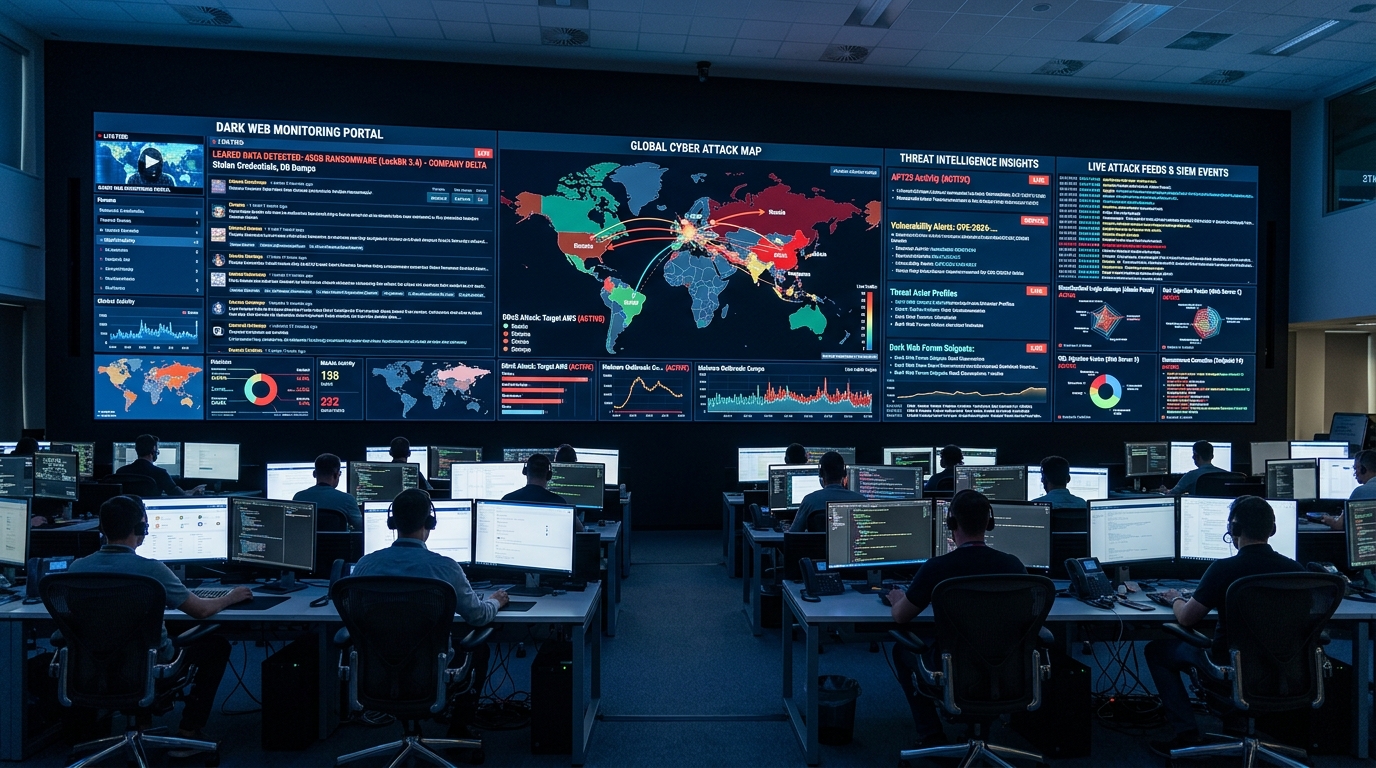
Traditional cyber security tools defend the perimeter. Dark web monitoring flips that model. It looks outside your organisation for evidence that your information has already been exposed. Dark web monitoring Isn’t Scanning the Web — It’s Hunting Intelligence about your business.
So, how does dark web monitoring work?
1. Detect Stolen Credentials
Passwords and account credentials are among the most traded items on the dark web. Monitoring tools can crawl through these underground forums and marketplaces to spot your company’s email domains and user accounts.
2. Identifies Leaked Personal and Corporate Data
Employee personal information, customer records, intellectual property, and internal docs can all surface on the dark web after a breach. Early detection helps you act before data is weaponised and used to attack your business.
3. Spots Targeted Threats
Monitoring systems can identify chatter that targets specific executives, departments, or upcoming events. This crucial information can give early indication of social engineering or phishing campaigns.
4. Tracks Ransomware Negotiation Threads
After ransomware incidents, attackers sometimes post negotiations or proof of stolen data on dark web sites. These references can help incident response teams assess the scale of compromise.
Real-World Examples of Dark Web Monitoring
The impact of dark web leaks isn’t theoretical. Some of the largest breaches of the past decade were first signaled on the dark web and they all had enormous financial and reputation costs.
T-Mobile
In 2021, T-Mobile disclosed a massive breach involving over 50 million current, former, and prospective customer records. Data was first discovered circulating on dark web forums. This data included names, dates of birth, and social security numbers before public disclosure. It has been estimated this cost T-Mobile more than $500m in remediation, legal, and customer goodwill costs.
Clubhouse
In April 2021 Social audio platform Clubhouse experienced a leak where 1.3 million user records were posted on a hacking forum and subsequently appeared on dark web channels. While less sensitive than a financial breach, this raised trust concerns and underscored the speed at which data propagates off the corporate network.
These examples show the pattern. Having dark web intelligence isn’t just an afterthought, it is often the first emergent signal that an organisation has already been compromised.
What Are Dark Web Monitoring Alerts
A dark web monitoring alert isn’t a magic bullet, but it is a force multiplier.
They Give You Lead Time. If credentials or company data surface on dark web forums, that’s a strong indicator a breach has already occurred. It gives you a chance to act before attackers strike again. From my experience of detecting breaches you can avoid serious impact if you can act before the hackers take further action. Often they can sit quietly in the background assessing what to do next.
They Inform Your Response Strategy. Knowing what has been exposed helps prioritise password resets, risk assessments, and incident remediation. Once you know the depth of exposure you can make changes to stop the issue increasing and from their manage the level of damage working to limit any business impact.
They Reduce Business Risk. Armed with knowledge of compromise, teams can bolster authentication policies, patch exposed systems, and communicate with affected stakeholders before exploitation ramps up.
They Support Executive Decision-Making. CIOs and CISOs can present quantifiable external risk insights to boards and investors. Not just internal vulnerability scans.
To help give you the full picture dark web alerts do not do everything. They are not the silver bullet for dark web attacks. They won't manage internal system misconfigurations as they are looking outside your organisation. They don't replace the need for endpoint and network monitoring security tools. Everything in place to monitor security inside your perimeter is still relevant. They also don't help you pursue the attackers across the dark web with tracing tools to arrest those behind it.
Dark web monitoring complements existing security stacks by exposing risks beyond firewalls and VPNs.
How CyberSentrx Approaches Dark Web Monitoring
At CyberSentrx, we believe protecting your business starts with understanding what attackers already know about you. Our external identity threat detection platform continuously monitors:
Dark Web Sources - Including forums, marketplaces, encrypted channels, and credential dumps where stolen data is trafficked.
Public Web Vulnerabilities - Web assets that are exposed and easily discoverable by attackers.
Executive & Social Exposure - Detection of potential social engineering vectors tied to leadership teams.
Contextual Alerts with Actionable Guidance - Not just “data found” alerts but prioritised recommendations for remediation.
With CyberSentrx, CEOs and security leaders gain visibility into:
Leaked corporate credentials
Identity and brand mentions in criminal channels
Emerging threat signals that correlate with business context
Remediation steps backed by continuously updated intelligence
You can learn more about how this works at: https://cybersentrx.com/
Our platform is designed for organisations that need clarity, not noise delivering insights that matter to your business risk profile.
Summary - Visibility Defeats Surprise
Dark web monitoring is not an optional luxury but a strategic early-warning system for business risk. Companies that ignore what attackers see are essentially flying blind. For CEOs, the key question is no longer:
“Are we secure?”
It is:
“What are attackers already saying about us?”
If you want to transform hidden risk into actionable insight, monitor the dark web, contextualise exposure, and protect your organisation with modern external threat intelligence start with a platform designed to do exactly that.
Learn more at: https://cybersentrx.com/
Related Articles
Read more on dark web monitoring with our article on "The invisible perimeter - why your firewall cannot stop a dark web credential leak"